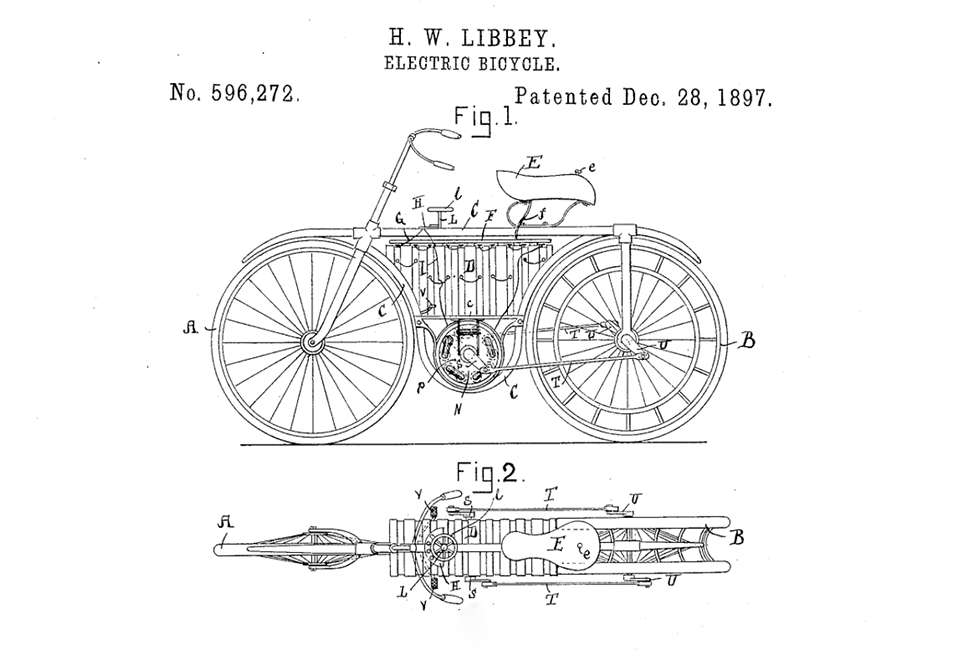
As rich as it is, the history of the bicycle is basically about trying to reduce the effort of using the bike while keeping it as simple as possible. Consider the dandy horse, or as it was more fittingly called in German, the Laufmaschine. Literally 'running machine,' this 1820s design was propelled by the rider pushing along the ground with the feet as in walking or running. It was therefore merely just a plaything for the rich and bored, until in the 1860s, pedals were added. Now the velocipede became a viable means of transport, coming in a variety of shapes and forms - some had three wheels, others could carry two passengers in tandem or sitting next to each other.
Bizarrely enough, back then, steam velocipedes actually had been a thing. The Michaux-Perreaux built some time from 1867 to 1871, and the 1867 or 1868 Roper steam velocipede are sometimes also considered the first motorcycles long before the gasoline-powered Daimler Reitwagen first hit the corners in 1885. With a 62 kg steam engine between your legs and on wooden wheels with iron tires, riding the Michaux-Perreaux must have been an interesting experience, to say the least.
Who wants to pedal anyway
These early attempts at a substitute propulsion system for bicycles were obviously doomed to fail. However, on the verge of the 19. and 20. centuries, internal combustion engines became compact enough to be fitted to a bicycle frame. Or into the rear wheel, as it was the case with the first 'vélomoto,' the 1892 Millet. It was actually equipped with a 500 cm3 five-cylinder rotary engine directly attached to the fixed crank of the rear axle. Typically, however, these bikes were of more conventional designs with a gasoline engine bolted onto the frame, usually of the two-stroke variety and producing one or two horsepower.